
Zappit
THE BRAND
Zappit is a SaaS promotions platform that enables major FMCG and retail brands to deliver white-label digital coupon, cashback and reward experiences to consumers.
They were undergoing a major business and brand transition - requiring a clearer market position, stronger story, a more cohesive customer experience and a much more premium brand identity. Joining as the first and sole designer, I led the end-to-end rebrand strategy and execution, from competitor analysis and brand positioning through to a fully realised visual identity, website redesign, customer and client journey redesigns, and internal rollout.
ROLE
Head of Design
November 2024 - June 2025
Main responsibilities:
Led the strategic rebrand of Zappit, aligning business goals, customer needs, and brand positioning
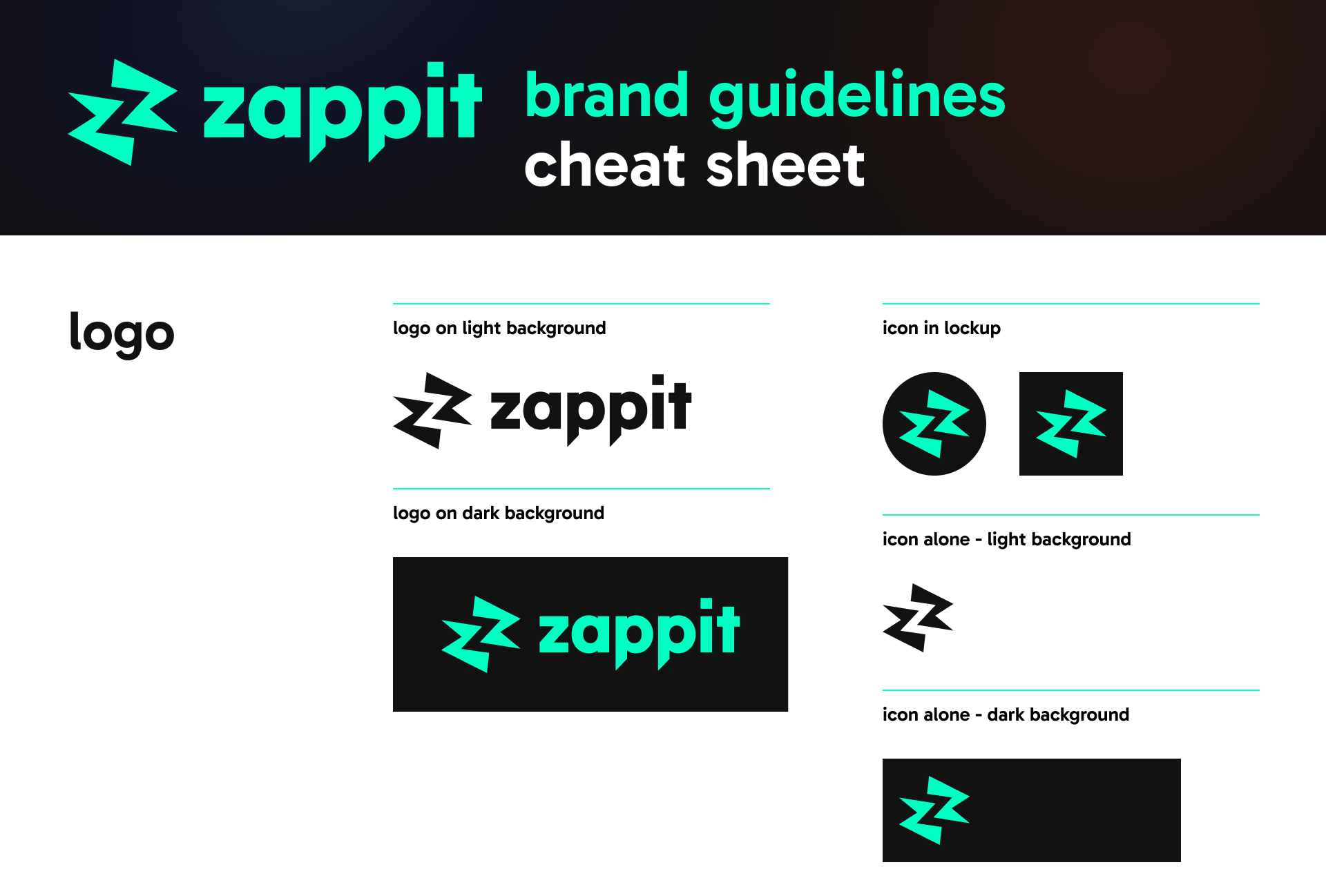
Developed the visual identity system, including logo, typography, colour palette, and brand guidelines
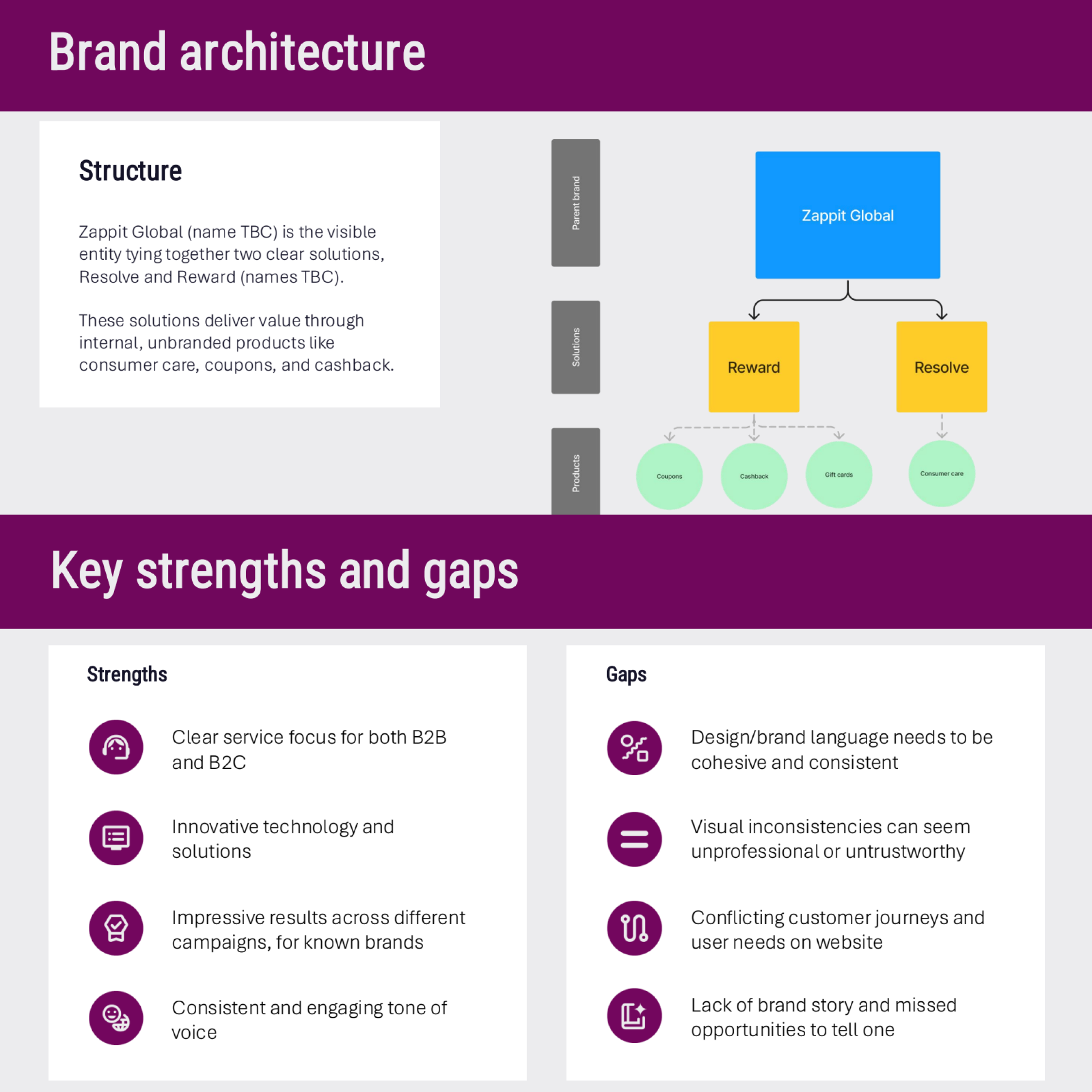
Defined brand architecture, positioning, messaging, and success measures for the rebrand
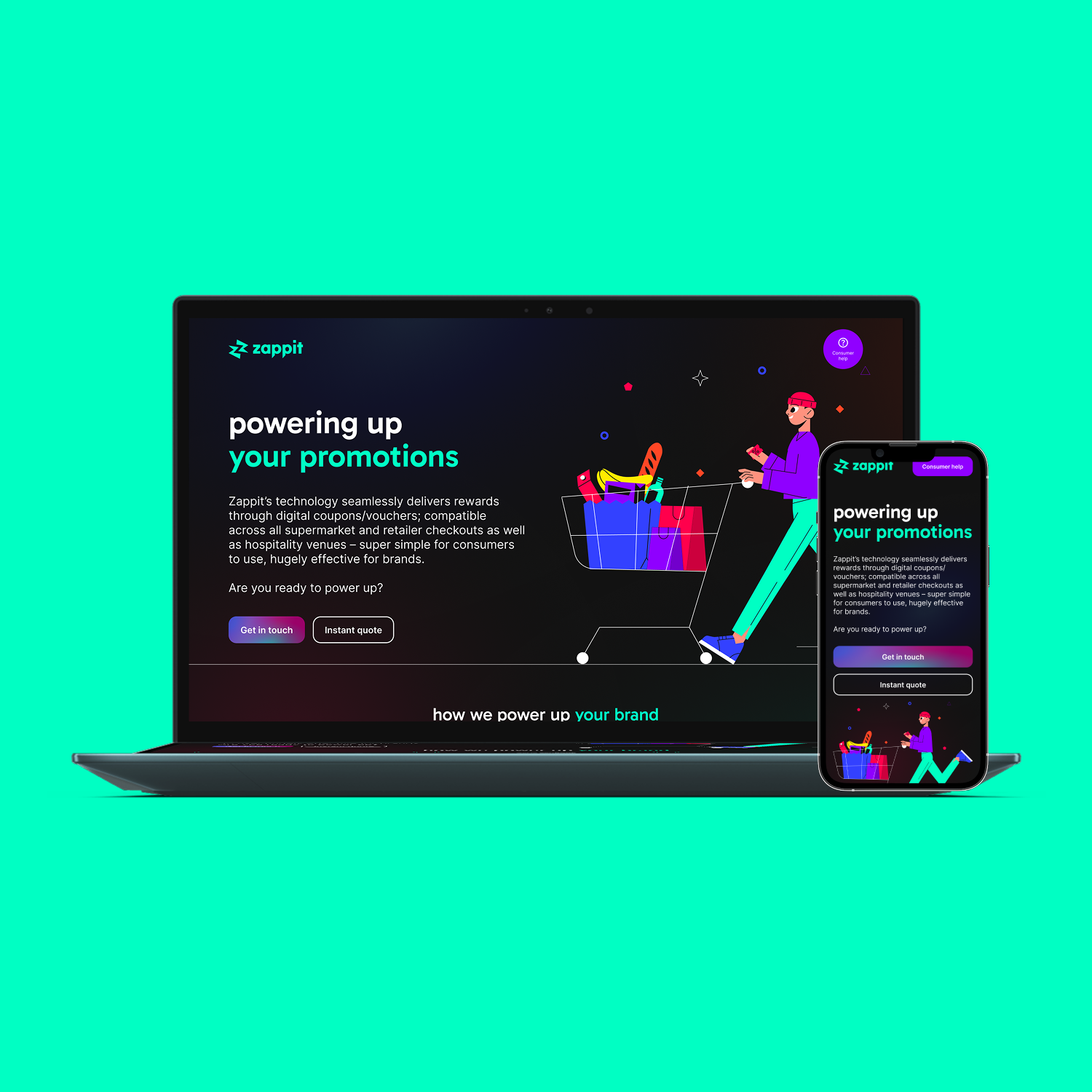
Redesigned the website, dashboard, user and client journeys without dedicated budget or research tooling
Rolled out the new brand across internal and external touchpoints, briefing teams and supporting adoption
Building a strategic brand foundation
Understanding the market and defining a future vision
One of my first priorities at Zappit was to understand both the market landscape and the business itself. I conducted competitor and industry analysis to identify opportunities for differentiation, whilst also auditing Zappit’s existing proposition, brand story, and digital experience. This helped uncover inconsistencies in how the business positioned itself and highlighted opportunities to strengthen both customer perception and internal alignment. From there, I explored multiple strategic routes for the future of the business, mapping what a rebrand could look like and helping leadership understand the implications of different directions.
Defining the structure for long-term success
Once a direction had been agreed, I documented a new strategic structure for the brand, alongside clear success measures that aligned with business goals. Beyond visual identity, this work focused on defining the foundations the business could consistently rally behind, including brand positioning, core messaging, principles, and long-term aspirations. Working across teams, I facilitated alignment between commercial objectives and customer needs, helping create a clearer, more scalable vision for the future of Zappit.
Creating and embedding a scalable brand identity
Developing a visual identity from the ground up
With strategic foundations in place, I led the development of Zappit’s new visual identity system. This involved extensive exploration and iteration, from researching competitors and gathering inspiration through to moodboarding, analysing successful brands, and experimenting with different creative routes. I explored logo structures through early-stage ‘wireframing’ and iterative development before finalising the chosen direction. This ultimately evolved into a cohesive identity system, including logo, typography, colour palette, visual principles and sales materials designed to strengthen recognition and consistency across the brand.
Rolling out change across the business
A large part of the challenge was ensuring the new identity was not just created, but successfully adopted. I developed brand guidelines and practical frameworks to support implementation, announced and briefed the rebrand internally, and worked to embed the identity across existing assets, customer-facing materials and digital experiences. I also supported rollout to both clients and customers, ensuring the new brand felt consistent, credible and scalable at every touchpoint.
Transforming digital experiences without dedicated budget
Redesigning journeys, experiences and digital touchpoints
Alongside leading the rebrand, I worked extensively on improving Zappit’s digital customer experience. This included redesigning the website, refining key user journeys and evolving the dashboard and portal experience to create a more cohesive, intuitive ecosystem. As the sole designer, I balanced strategic thinking with hands-on delivery, ensuring that the new brand translated meaningfully into product experiences rather than existing purely as a visual layer.
Delivering impact through collaboration and pragmatism
Working within constraints, including no dedicated research tooling or additional budget, required a highly pragmatic approach to design. I collaborated closely with stakeholders across the business to gather insight, align priorities and maintain momentum, whilst independently driving design decisions and execution. By combining brand strategy, UX thinking and product design, I helped establish stronger foundations for both the business and customer experience, positioning Zappit for future growth.
Learnings and challenges
Navigating ambiguity and shaping direction
Stepping into a business undergoing significant change required balancing strategic thinking with delivery at pace. Much of the role involved creating clarity where there was little existing structure, influencing stakeholders, and helping teams align around a shared direction. The breadth of the role pushed me to think beyond traditional design responsibilities, blending brand, product and customer experience into a single, joined-up vision.
Driving meaningful change as a sole designer
One of the biggest learnings from my time at Zappit was the importance of adaptability and influence when working as a sole designer. From defining strategy and visual identity to redesigning journeys and supporting rollout, the role required wearing multiple hats whilst maintaining a clear focus on long-term impact. It reinforced the value of design not only as a creative discipline, but as a tool for business transformation.